About UAP and Interstellar Objects


Below is a set of questions from a reporter that I had received this morning along with my answers:
1. How should the public, and the scientific community, interpret the recently declassified U.S. files? What do you think is the most important part of the recently released U.S. files?
The release of files on Unidentified Anomalous Phenomena (UAP) is a blessing to both national security of the U.S. and science more globally. There are two possibilities: either UAP are human-made, in which case the fact that they hover over strategic assets implies that they were sent by adversarial nations for the purpose of espionage. However, even if one technological object is not human-made, this will be the biggest discovery ever made by humanity.
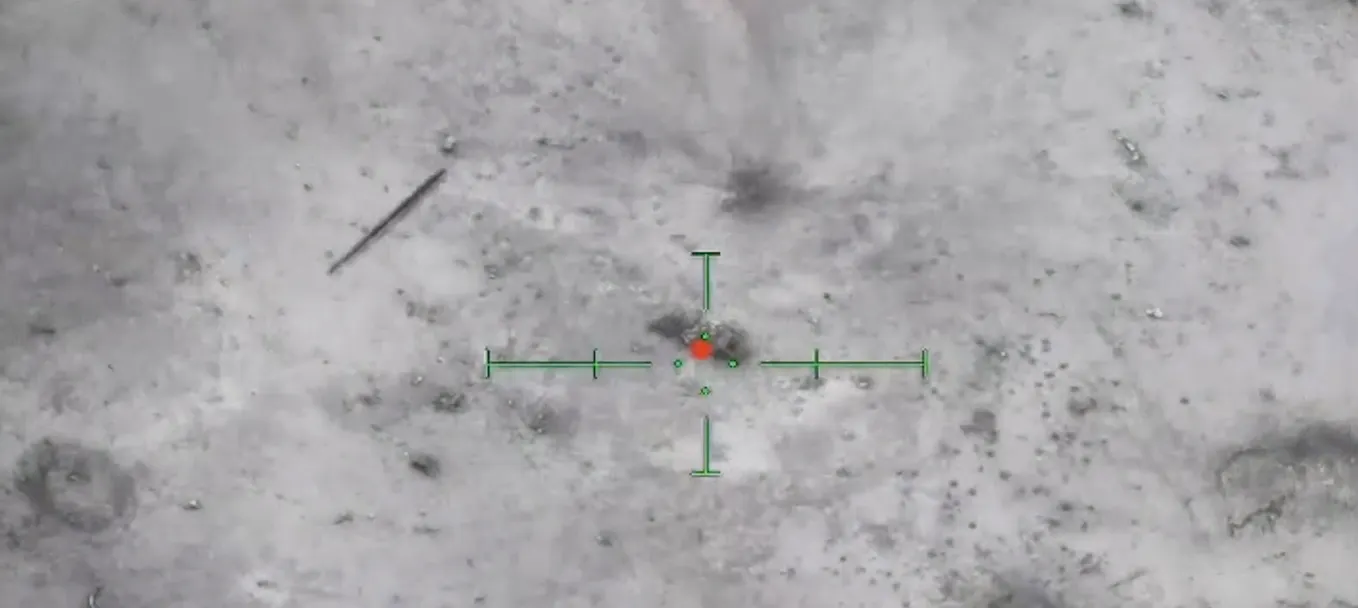
The latest UAP file release on June 12, 2026 includes a new report (accessible here) dated June 5, 2026, signed by Dr. Jon Kosloski, the director of the All-Domain Anomaly Resolution Office (AARO) in the Pentagon. The report mentions that during two days in October 2023 law enforcement officials noticed UAP including an orange “mother” orb launching smaller red orbs, with 40% of the reported phenomena being unresolved as they lack a reasonable explanation as human-made technologies. In the same week, I was asked to lead a UAP Science Advisory Council to the Office of the Director of National Intelligence (ODNI), AARO, the White House, the FBI and the Intelligence Community. By now, I assembled a team of 15 brilliant members which submitted a request for over 50 items of information. The quality of the council’s findings will depend strongly on the data we are provided. We will make the best lemonade out of any lemons we have.
Whether UAP are non-human made is not a philosophical debate. It should be settled by high-quality scientific data. The current uncertainty about the nature of UAP reflects the inconclusive data that was released publicly so far.
Many people feel uneasy about uncertainty and wish to have definitive answers through a belief system (for believers) or prejudice (for skeptics). Scientific research is characterized by uncertainty because if we were absolutely certain of a particular notion — there would have been no reason to conduct the research.
2. After 3I/ATLAS made its closest approach to Earth, what could be the basis for new discoveries suggesting extraterrestrial life?
The next interstellar object — say 4I/Rubin if it will be discovered by the Rubin Observatory in Chile — should be studied more closely than 3I/ATLAS was. For example, if it sheds methane gas near the Sun, we should check whether that might be a biological signature of microbial life. Also, if 4I/Rubin does not behave as expected for a comet or an asteroid, as 1I/`Oumuamua did, we should plan a rendezvous space mission that will intercept its path and take a high-resolution image of it.
As in the case of UAP, there is nothing better than high-quality data to settle all disputes about priors.
3. Are there any updates about the Galileo Project Observatories? Why did you first start this project, and what is the ultimate target of it?
The Galileo Project operates three observatories, with the most advanced one in Las Vegas, Nevada. It contains three units observing the sky in the infrared, optical, audio and radio, separated by 10 kilometers from each other. This allows us to infer the distance, velocity and acceleration of objects of interest through the method of triangulation. We plan to release multiple scientific papers about our results this summer.
The Project was established 5 years ago, shortly after ODNI released the first report to the U.S. Congress suggesting that UAP are real and require further study. The Galileo Project represents the first sustained scientific effort to monitor the entire sky at all times from multiple sites. The Project’s goal is to find out whether there might be non-human-made technological objects near Earth. In addition to the three observatories, I have led a Pacific Ocean expedition in June 2023 in search for materials in the crash site of an interstellar meteor. We are planning future expeditions of this type.
4. How can we distinguish rationally between “unexplained” and “evidence of extraterrestrial origin”? What kind of evidence would you consider truly compelling? What standards should scientists use when evaluating online sighting videos?
Get Avi Loeb’s stories in your inbox
Join Medium for free to get updates from this writer.
That we might be visited by alien technologies is an ordinary claim, given that most of the hundred billion Sun-like stars in the Milky-Way galaxy formed billions of years before the Sun. As such, it deserves ordinary evidence. The evidence could be maneuvering outside the performance envelope of human-made technologies, a high-resolution image, or a sample of materials that indicate a non-human technological origin.

5. If humanity were to make contact with an extraterrestrial intelligence, what posture should we adopt? If extraterrestrial life exists, what form do you think it is most likely to take?
Our response should depend on the nature and intent of the visitor. It would be prudent to observe the other side before reaching any conclusions, as the encounter will be a learning experience for us, as expected from an interstellar blind date. My guess is that the visitors will be friendly, because they had plenty of time to destroy our civilization by now.
I am particularly curious to learn whether the visitors are robots with artificial intelligence made of silicon chips or living creatures which were optimized through synthetic biology. This will provide us with a hint as to our own future.
6. For those who feel frightened by these developments, what reassurance can science offer? What is the most rational way for the public to approach this topic?
The scientific approach of being guided by evidence is our best path for adapting to the cosmic reality that surrounds us. Ridiculing the notion that we might be visited will not rid us from these visits for the same reason that the Earth continued to move around the Sun even when the Catholic Church insisted otherwise.
7. Are there places on Earth where extraterrestrial life or unusual phenomena may be easier to observe? If so, what makes those places special?
We do not know. This is work in progress. Naturally, the UAP reports are clustered where most sensors and people are concentrated.
ABOUT THE AUTHOR

Avi Loeb is chair of the UAP Science Advisory Council to the White House, Pentagon, FBI and intelligence agencies, director of the Galileo Project, founding director of Harvard University’s — Black Hole Initiative, former director of the Institute for Theory and Computation at the Harvard-Smithsonian Center for Astrophysics, and the former chair of the astronomy department at Harvard University (2011–2020). He is a former member of the President’s Council of Advisors on Science and Technology and a former chair of the Board on Physics and Astronomy of the National Academies. He is the bestselling author of “Extraterrestrial: The First Sign of Intelligent Life Beyond Earth” and a co-author of the textbook “Life in the Cosmos”, both published in 2021. The paperback edition of his new book, titled “Interstellar”, was published in August 2024.
Professional website:
https://lweb.cfa.harvard.edu/~loeb/
Social media:
https://avi-loeb.medium.com/
https://www.youtube.com/@ProfessorAviLoeb
https://open.spotify.com/show/1zhndXkvSY2b8FdjspFpCd
https://x.com/ProfAviLoeb